


Indeed, fragmentation of Android has forced me to ponder about the OS. I have obsessed with the OS whether its fragmentation is really ominous for Google. There’s sufficient data available on the distributions of Android version accordance to users’ base. However, the company has also been providing the data since the beginning of 2010. The graph (below) has been provided to you to understand how Android fragmentation is varying quarter-over-quarter.
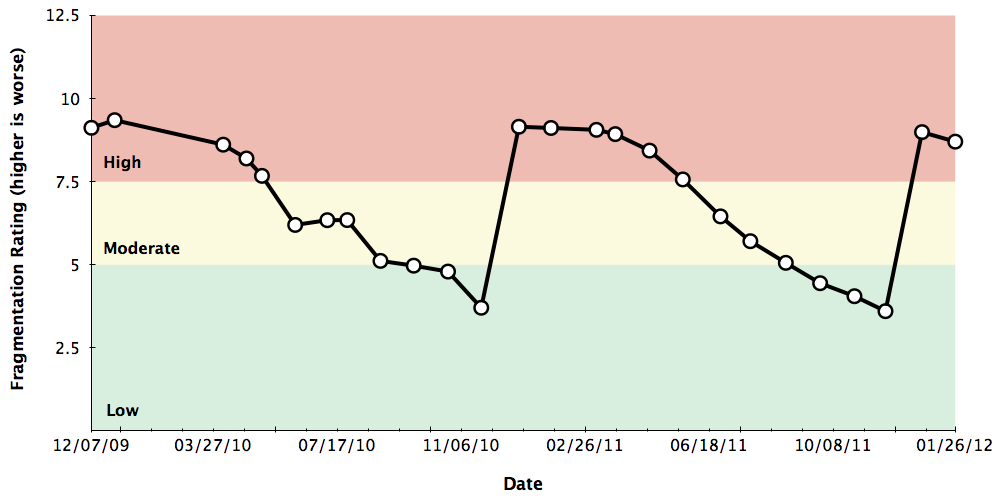 The fragmentation has been rated from 0-12.5, higher the rating point boding worse fragmentation. Android fragmentation was reportedly at the lowest point in December 1, 2011. Since after, it returned to high fragmentation—after the release of new version ICS.
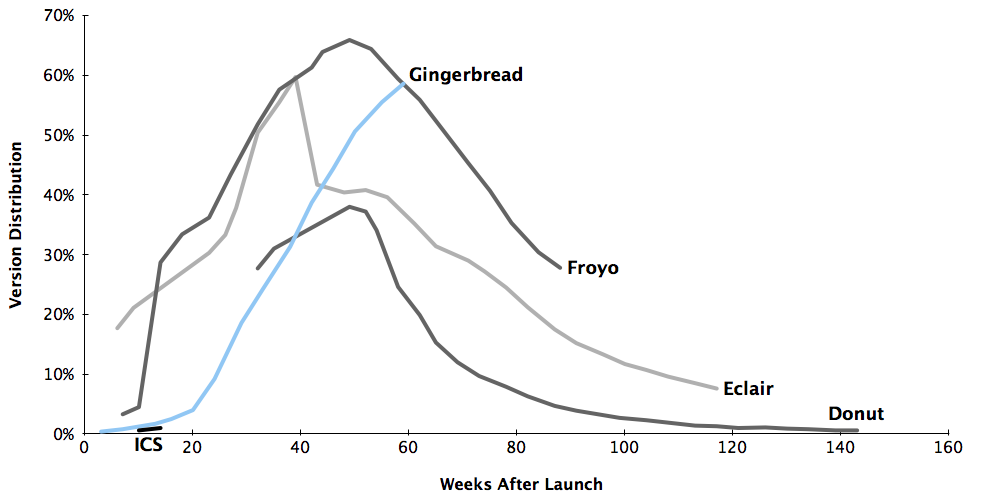 The newest version of Android ICS is slowly proceeding its way into the market which has been represented by the slope of line in the graph (above). The percentage of devices on different versions after its launch has been provided in the above chart. The proliferation of gingerbread was little less than Froyo or Éclair in the beginning. It’s very easy to judge ICS trajectory, the penetration of the newest version of Android is just 1%, and however, it is expected to extend later this year. Gingerbread is considered as most successful Android version ever till date, hold 58.6% of the total Android market share by the Feb 1 this year.
Gingerbread is still adding the devices 16 times faster than ICS. I little agree with the argue that a developer will not be put off due to low market share if the number of devices shipment perform significant. With similar fashion, I don’t care about the current market share of ICS , if the absolute number of ICS devices will be succeeded to grab significant figure. On comparing, the devices running on Android three versions—Éclair, Froyo, and Gingerbread—we found that Gingerbread is quite dominating over its predecessors. At present, 15 million devices are powered by Éclair, while 54 million and 144 million devices are powered by Froyo and Gingerbread respectively. As we previously discussed, Honeycomb has not impressively performed and it has just 3.4% share among Android market. Only 6.6 million devices are presently running on Honeycomb OS, while Apple sold 15.4 million devices just in Q4 last year.
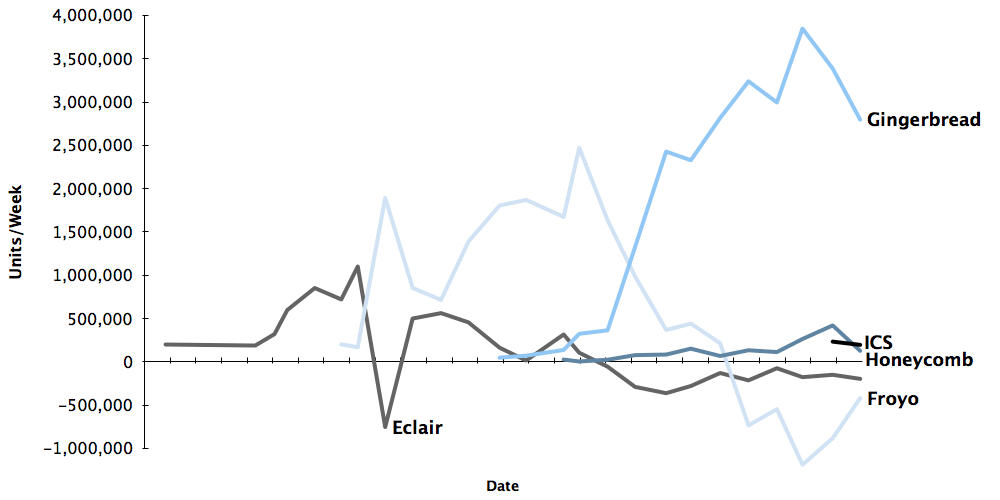 The chart has been provided you to know numbers of devices are being activated week-over-week. However, the graph is not clearly boding about the more unified Android user base on ICS. The number of ICS devices are being activated just 200,000 per week, nearly the same as Froyo and Éclair entered into the market. The ICS devices are being activated every day is quite low compare to 850,000 devices activated per day, declared by Andy Rubin at MWC. However, ICS has been introduced for more users base and also, for both Tablet as well as Smartphone. Therefore, we might expect more rapid ICS uptake later this year—either by higher sales or software upgrades on older versions.
I have mentioned earlier how Android fragmentation has jeopardized to Google, and what would be its outcomes? Do you think the fragmentation has become a challenge for Android latest ICS version? Also, developers more prefer to work iOS platform rather than Android. Besides, Android users are not much satisfied as iOS users. Anyway, ICS is struggling to clinch market, but, a good future is still ahead for it.
Image credit: PXLDOT